The long-anticipated future of personal and urban transportation has taken a monumental, tangible step forward. For decades, the concept of a “flying car” has been a staple of science fiction, symbolizing humanity’s ultimate ambition for freedom and technological mastery. Today, that vision is transitioning from fantasy to functional reality. Recent, groundbreaking developments have seen several advanced flying car prototypes not only take to the skies in test flights but, more crucially, receive official airworthiness certifications from stringent aviation authorities. This isn’t just a trial permit; it is a formal recognition that these vehicles meet specific, rigorous safety and operational standards set for aircraft. This certification is the pivotal key that unlocks the next phase: moving beyond controlled demonstrations to potential real-world integration and, eventually, commercial deployment. This article delves deep into the significance of this achievement, explores the technologies powering these prototypes, examines the daunting regulatory hurdles being cleared, and projects the transformative impact on our cities, economies, and daily lives.
A. Deconstructing Airworthiness: What Certification Truly Means for Flying Vehicles
To appreciate the magnitude of this milestone, one must first understand the profound meaning of “airworthiness certification.” In the realm of aviation, this is not a mere formality but the most sacred of seals. Issued by national aviation bodies—such as the Federal Aviation Administration (FAA) in the United States, the European Union Aviation Safety Agency (EASA), or their equivalents—this certification is a legal declaration that an aircraft type (or in this case, a vehicle type) has been designed, engineered, tested, and manufactured in full compliance with established safety and performance regulations.
The process is exhaustive, encompassing thousands of hours of analysis and physical testing. For a novel vehicle category like a flying car, or more accurately termed an electric Vertical Take-Off and Landing (eVTOL) aircraft or roadable aircraft, the path is even more complex. Authorities must often create new frameworks or adapt existing ones. The certification validates critical aspects:
A. Structural Integrity: The vehicle’s airframe must withstand extreme stresses, including gust loads, hard landings, and pressurization cycles, far beyond what it would encounter in normal service.
B. Propulsion System Reliability: Especially for electric multi-rotor systems, redundancy is key. The design must prove it can safely complete a flight even with the failure of one or more motors or propellers.
C. Flight Control and Stability: The vehicle must demonstrate predictable, stable, and controllable handling characteristics in all expected flight conditions, including turbulence and emergency scenarios.
D. Systems Safety: All onboard systems—avionics, batteries, software, navigation, and communication must be fail-safe or include redundant backups. The software, in particular, undergoes scrupulous review.
E. Crashworthiness: While ensuring safety in flight is paramount, designs must also consider occupant protection in the unlikely event of an incident, similar to automotive safety standards.
Therefore, when a flying car prototype receives this nod, it signals a quantum leap in credibility. It moves the vehicle from being an “experimental” or “demonstrator” project to a platform that regulatory bodies deem sufficiently safe for further stages, such as pilot training programs, limited commercial operations, and public trials.
B. Pioneers of the Sky: Examining the Certified Prototypes and Their Technologies
Several pioneering companies are at the forefront, having achieved or being in the final stages of achieving these historic certifications. Their designs vary, reflecting different visions for the initial use cases of this technology.
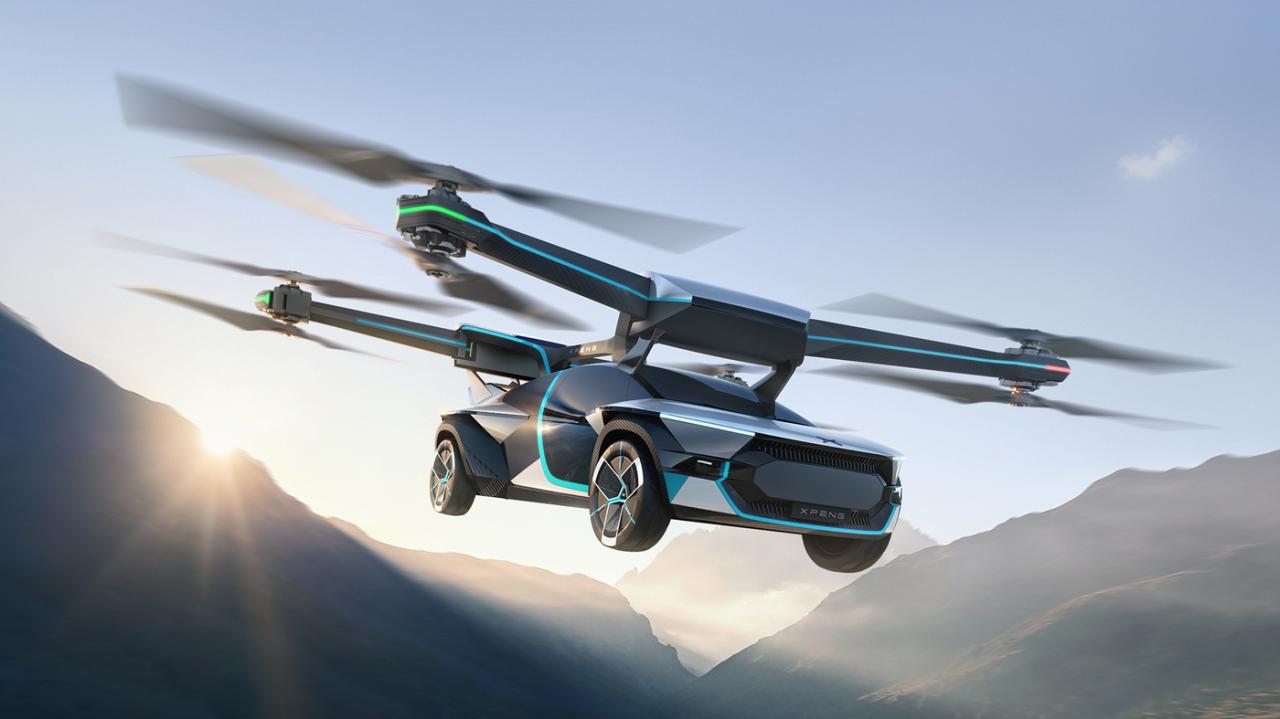
1. The eVTOL Urban Commuter Model: This is the most prevalent design, often resembling a large, sleek drone with a passenger cabin. These vehicles are purely for aerial travel, optimized for quiet, electric, point-to-point flight within and between urban centers. They typically feature multiple fixed rotors (often 6-8 or more) for vertical lift, which then tilt or are supplemented by dedicated cruise propellers for forward flight. Their certification path often aligns with that of small aircraft or new categories for powered-lift. Companies in this space have made significant strides, with some receiving permits for test flights under specific conditions and others achieving full type certification for their production models.
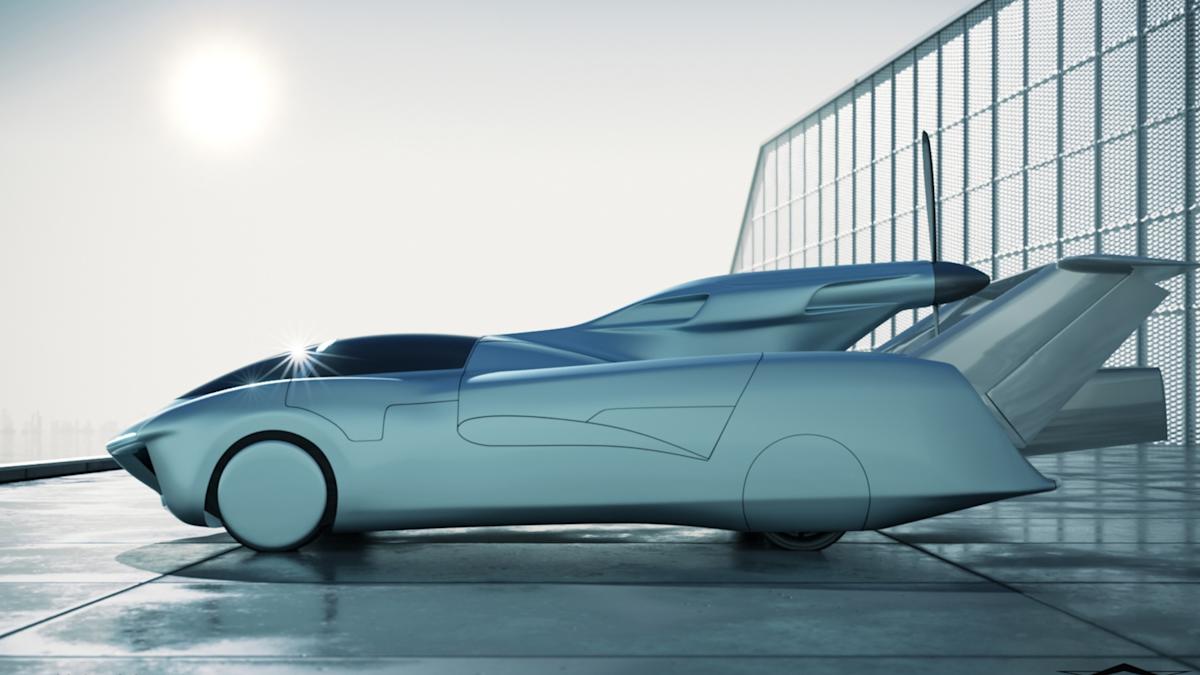
2. The Roadable Aircraft (True “Flying Car”): This dual-mode vehicle captures the classic imagination. It functions as both a licensed road vehicle and a certified aircraft. The engineering challenges here are immense, as it must meet the safety standards of both automotive and aviation regulators a compromise that often leads to weight penalties and complexity. The certification process is consequently bifurcated. One agency certifies it for flight, while a national highway authority certifies it for road use. Prototypes in this category often feature foldable wings, retractable rotors, and hybrid powertrains to manage the differing demands of road and sky.
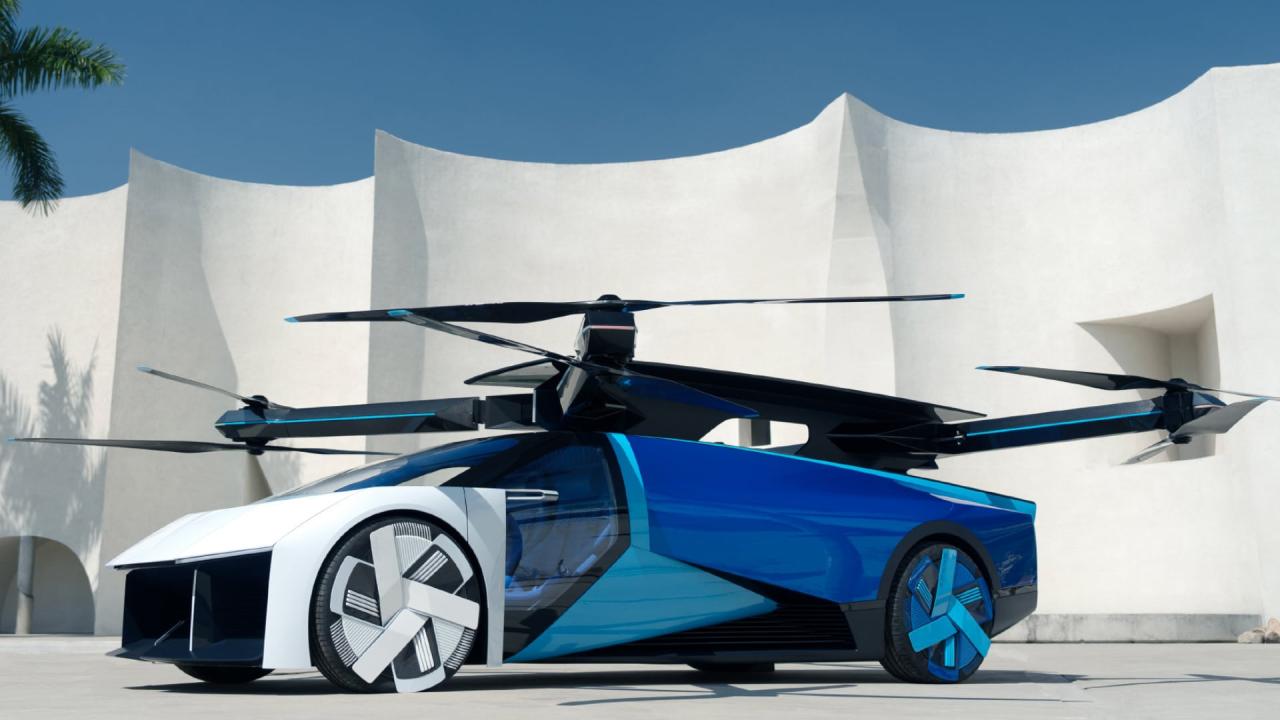
3. The Personal Air Vehicle: Slightly distinct, these are often single or two-seater vehicles designed for private ownership, akin to owning a helicopter but vastly simpler to operate. They may leverage simplified flight controls, extensive computer assistance (fly-by-wire), and even autonomous flight modes to make piloting accessible. Their certification considers pilot skill levels, potentially under new “Light Sport” or “Very Light Aircraft” categories with simplified licensing requirements.
The core technologies enabling these prototypes are synergistic advancements from various fields:
-
Distributed Electric Propulsion (DEP): Using multiple small electric motors and rotors instead of one or two large combustion engines. This provides inherent redundancy, lower noise, and superior control.
-
Advanced Lightweight Composites: Carbon fiber and advanced aluminum alloys keep weight minimal while maintaining structural strength, crucial for both flight efficiency and automotive range.
-
Energy-Dense Battery Packs: The pace of development in lithium-ion and solid-state battery technology directly dictates range and payload. Thermal management and safety are paramount design foci.
-
Autonomous Flight Systems: While initial certifications are for piloted vehicles, the underlying AI and sensor suites (LiDAR, radar, cameras) for obstacle avoidance and automated navigation are being developed and tested in parallel, paving the way for future pilotless operations.
-
Vehicle-to-Everything (V2X) Communication: These aircraft will not fly in isolation. They will be integrated into a broader digital ecosystem, communicating with other aircraft, ground control stations (vertiports), and air traffic management systems to ensure safe routing and spacing.
C. Navigating the Legal Labyrinth: The Unseen Challenge of Regulation
Technological achievement is only half the battle. The regulatory and airspace integration challenge is arguably just as formidable. Aviation authorities worldwide are engaged in a delicate balancing act: fostering revolutionary innovation while upholding their non-negotiable mandate for safety.
The certification of prototypes is the first major domino to fall in a long chain. Following this, regulators must now tackle the operational framework:
A. Pilot Licensing and Training: What skills are needed to fly these vehicles? Will a new class of license be created, blending simplified aircraft operation with knowledge of urban airspace management?
B. Air Traffic Management (ATM) Evolution: How will hundreds or thousands of eVTOLs be integrated into already crowded skies, especially near cities? New, largely automated systems using U-space (in Europe) or FAA’s UTM (Unmanned Traffic Management) concepts are under development to handle low-altitude traffic digitally.
C. Infrastructure Standards: The takeoff and landing zones, “vertiports,” need standardization for safety, charging, security, and noise abatement. Their integration into urban landscapes requires city planning and zoning law updates.
D. Noise Certification: For social acceptance in urban environments, these vehicles must be significantly quieter than helicopters. Specific noise limits are becoming a part of the certification criteria.
E. Maintenance and Continuing Airworthiness: Establishing licensed maintenance procedures, parts supply chains, and mandatory inspection schedules for these novel vehicles is critical for long-term safety.
The fact that prototypes are being certified proves that a constructive dialogue between innovators and regulators is not only possible but is yielding results. It establishes a precedent that other companies can follow, creating a clearer, if still challenging, path to market.
D. The Ripple Effect: Projected Impacts on Society, Economy, and Urban Design
The successful certification and eventual commercialization of flying cars will send ripples across every facet of modern life. The implications extend far beyond a novel way to avoid traffic.
1. Revolutionizing Transportation Networks: The primary impact will be the creation of a third dimension for daily transit. This could dramatically reduce travel times for medium-distance journeys (20-150 km), turning hour-long commutes into 10-15 minute flights. It will create new high-speed links between city centers, airports, and suburban or exurban areas.
2. Economic Renaissance and New Industries: An entirely new economic ecosystem will emerge:
-
Manufacturing: New aerospace manufacturing hubs and supply chains.
-
Infrastructure: A boom in vertiport construction, charging networks, and air traffic control software.
-
Services: New companies in fleet operations, air taxi services, vehicle maintenance, pilot training, and insurance.
-
Job Creation: From aerospace engineers and software developers to vertiport operators and flight dispatchers.
3. Urban and Regional Planning Transformation: The “commuter shed” of cities could expand, potentially easing housing pressures in central urban cores as living farther away becomes more feasible. However, it also poses challenges: managing air rights, preventing noise pollution in communities under flight paths, and ensuring equitable access to avoid creating a two-tier transportation system.
4. Environmental Considerations: The shift to all-electric propulsion offers the promise of decarbonizing a segment of travel. However, the net environmental benefit depends entirely on the source of the electricity used for charging. When powered by renewables, eVTOLs could offer a very low-carbon alternative to short-haul flights and gasoline-powered car trips, especially in congested routes.
5. Emergency and Utility Services: The applications extend beyond passenger travel. Certified flying vehicle platforms can be rapidly adapted for critical services: emergency medical services (air ambulances), rapid organ delivery, disaster response and assessment, firefighting, and infrastructure inspection, reaching areas inaccessible to helicopters or ground vehicles more quickly and cheaply.
E. The Road (and Sky) Ahead: Challenges and the Timeline to Commercial Reality
While certification is a watershed moment, it is not the finish line. Significant hurdles remain before the average person can hail an air taxi or park a flying car in their garage.
-
Cost and Scalability: Initial vehicles will be extremely expensive, targeting premium services. Mass production and technological maturation are needed to bring costs down.
-
Public Acceptance: Safety perceptions, noise concerns, and privacy issues (related to vehicles flying over homes) must be proactively addressed through transparent communication and demonstrably safe operations.
-
Airspace Integration Complexity: Building the digital management system for dense urban air traffic is a software and regulatory challenge of unprecedented scale.
-
Battery Technology Evolution: For true viability, ranges need to extend, and charging times need to decrease further without compromising safety or weight.
The timeline is progressive. We are likely to see the first commercial, piloted air taxi services in specific, pre-approved corridors in major cities within the next 2-5 years. These will be niche, premium services. Wider adoption and more affordable models, including potentially autonomous operations, are probably a decade or more away, depending on the resolution of the above challenges.
Conclusion: A Certified Future Takes Flight
The granting of airworthiness certifications to flying car prototypes is an unequivocal signal that the era of practical urban air mobility has begun. It is a testament to human ingenuity, converging advancements in aerospace, electrification, and digital technology. This milestone moves the conversation from “if” to “when and how.” The challenges of regulation, infrastructure, and public integration are substantial, but the foundational barrier proving these machines can be built to meet the exacting safety standards of flight is being systematically overcome. We are witnessing not merely the evolution of the automobile or the aircraft, but the birth of an entirely new dimension of human mobility, one that promises to reshape our world from the sky down. The prototype phase is concluding; the era of certified flight begins now.