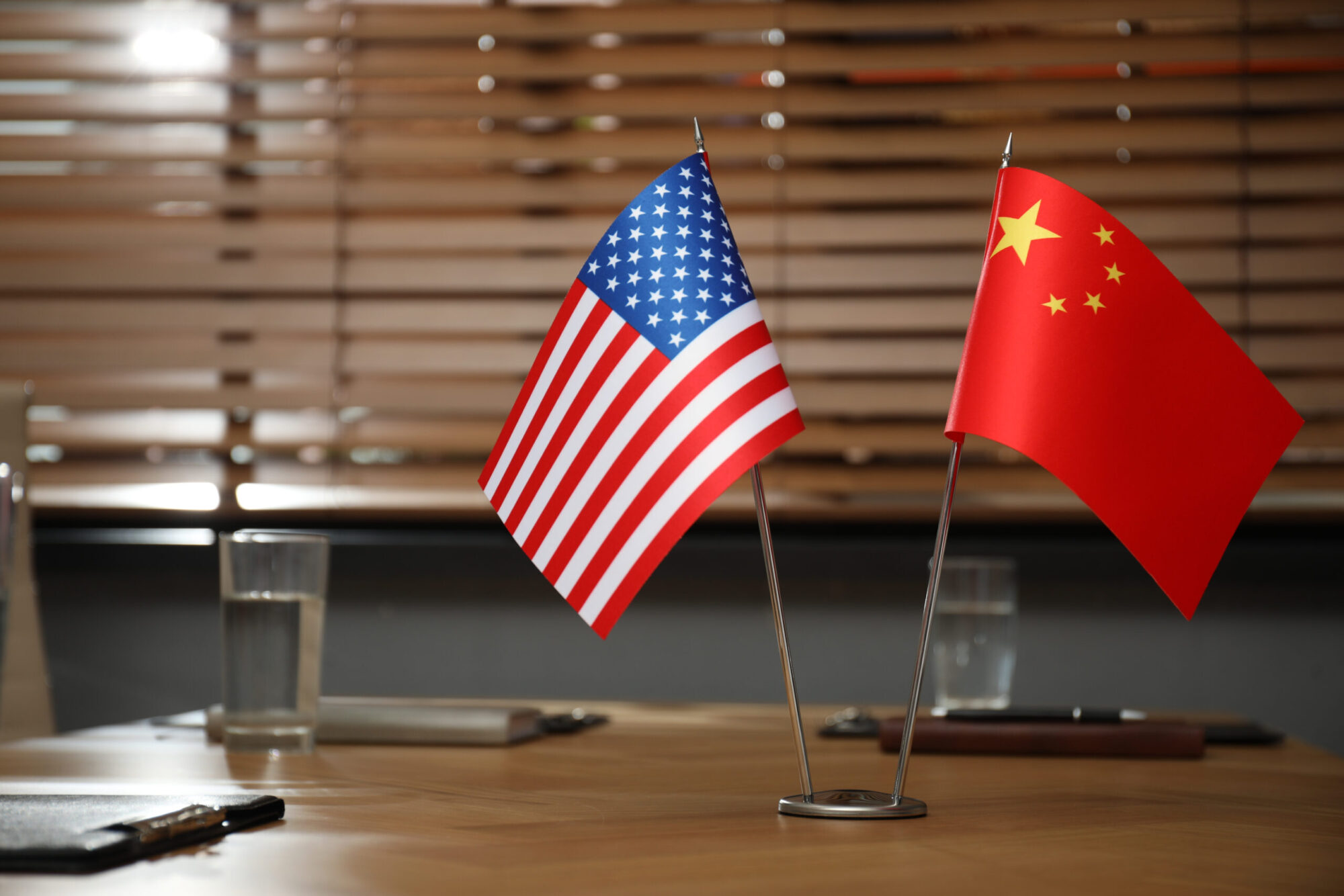
In the 21st century, the most significant geopolitical contest is not fought over territory with traditional weapons, but in the intangible realm of technology. The intensifying rivalry between the United States and China, often termed a “Tech Cold War,” represents a fundamental struggle for economic power, military advantage, and the very shape of the future global order. This confrontation extends far beyond trade imbalances, striking at the heart of innovation, data control, and technological standards. Unlike the 20th-century Cold War, this conflict is deeply integrated, with supply chains, capital, and research entangled, making decoupling painful and complex. This article will dissect the core battlegrounds, the strategies employed by both superpowers, the global ripple effects, and the profound implications for nations, corporations, and consumers worldwide.
A. The Genesis: From Economic Interdependence to Strategic Rivalry
For decades, the US-China relationship was framed by constructive engagement. China’s accession to the World Trade Organization (WTO) in 2001 heralded an era where American capital and consumer markets fueled China’s manufacturing boom, while inexpensive goods boosted American living standards. However, this symbiosis contained the seeds of conflict. China’s state-driven industrial policies, notably “Made in China 2025,” explicitly targeted dominance in advanced technologies like robotics, aerospace, and new-energy vehicles. The US perception gradually shifted from viewing China as a compliant partner to seeing it as a “strategic competitor” leveraging Western openness to achieve technological parity and eventual supremacy.
The tipping point arrived with the confluence of several factors. Rampant cyber-espionage for intellectual property, forced technology transfers as a condition for market access, and the meteoric rise of Chinese tech champions like Huawei in critical infrastructure alarmed Western security establishments. The belief that economic liberalization would inevitably lead to political liberalization in China faded, replaced by a consensus in Washington that technology leadership is inextricable from national security. This paradigm shift transformed technology policy into a primary tool of statecraft, launching the open rivalry we witness today.
B. Core Battlegrounds in the Tech Confrontation
The US-China tech war is not a single-front engagement but a multi-theater campaign. Several domains have emerged as critical to determining the eventual outcome.
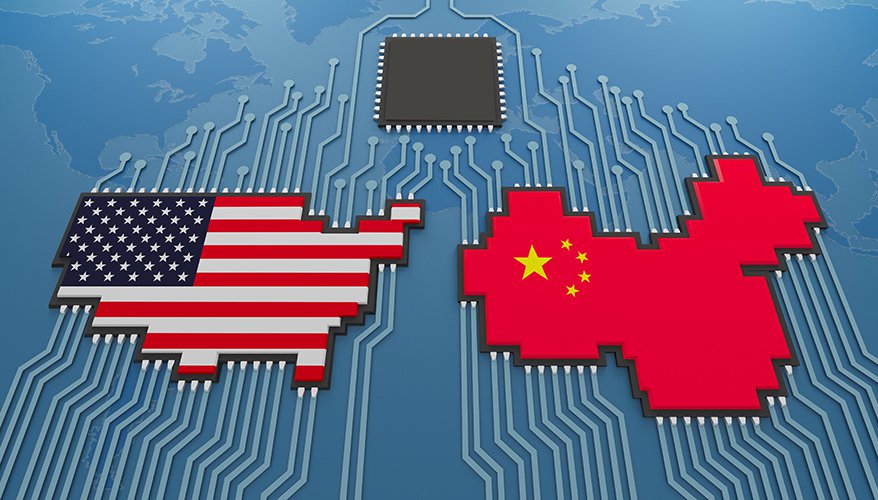
B.1. Semiconductor Supremacy: The Heart of Modern Technology
Semiconductors, or chips, are the brains of every advanced device, from smartphones to fighter jets. This industry epitomizes the conflict’s complexity. The US maintains a commanding lead in design and essential design software (EDA tools), with companies like NVIDIA, Intel, and Qualcomm. However, manufacturing, particularly the cutting-edge sub-10 nanometer process, is dominated by Taiwan’s TSMC and South Korea’s Samsung. China, despite massive investment, lags years behind, especially in producing advanced chips.
The US strategy has been to constrict China’s access through escalating export controls. The sweeping October 2022 regulations cut off not only advanced chips but also the equipment, software, and even talent needed to produce them. This is a classic “choke point” strategy, aiming to slow China’s progress in AI and supercomputing by denying it the necessary hardware. China’s response is a national crusade for self-sufficiency, pouring over $100 billion into its chip sector. However, building a fully independent, state-of-the-art semiconductor ecosystem from materials to manufacturing is arguably the greatest industrial challenge of our time.
B.2. The 5G/6G and Telecommunications Infrastructure Race
Fifth-generation (5G) networks are more than just faster internet; they are the backbone of the future Internet of Things (IoT), smart cities, and autonomous systems. Control over 5G standards and infrastructure confers immense economic and intelligence advantages. Huawei’s early lead in cost-effective 5G equipment prompted a fierce US counterattack, branding the company a national security threat due to potential backdoors for Chinese intelligence a claim Huawei consistently denies.
The US campaign has been multifaceted: a domestic ban, pressuring allies to exclude Huawei from their networks (the “Clean Network” initiative), and imposing sanctions cutting Huawei’s access to advanced chips. While successful in many Western nations, this push has had limited effect in the Global South, where Huawei’s offerings remain attractive. The battle is already extending to the research phase for 6G, where both nations are vying to shape the foundational protocols and patents.
B.3. Artificial Intelligence: The Ultimate High Ground
AI is considered a general-purpose technology with transformative potential for both economic productivity and warfare. The US-China AI race is a dual sprint between Silicon Valley giants and Chinese counterparts like Baidu, Alibaba, and Tencent. China benefits from vast troves of data, a relative lack of privacy regulations, and strong state support for research. The US advantages lie in foundational algorithms, a superior ecosystem for breakthrough innovation, and an unparalleled ability to attract global AI talent.
The military implications are staggering. AI is central to developing autonomous weapons systems, cyber-warfare tools, and intelligence analysis platforms. The fear is not just of a capability gap but of an ethical gap, with different norms governing lethal autonomous weapons. Both nations view leadership in AI as non-negotiable for future security, driving massive state investment and tight scrutiny of academic collaborations that once flourished.
B.4. The Platform and Data Wars: TikTok, WeChat, and Digital Sovereignty
This front revolves around control over information, software platforms, and the valuable data they generate. The US debate over TikTok, owned by China’s ByteDance, crystallizes the fear that data on millions of Americans could be exploited for espionage or influence operations. The demand for a sale to a US entity or a complete ban underscores the new principle: control over citizen data is a sovereign imperative.
Conversely, American platforms like Google, Meta (Facebook), and Twitter have long been blocked in China, creating a parallel digital universe dominated by Chinese apps. This represents a broader clash of models: a largely open, though increasingly regulated, Western internet versus a sovereign, state-managed Chinese cyber-space. The battle is over who sets the rules for data governance, content moderation, and the very architecture of the global internet.
C. Strategic Arsenal: Tools of Economic Statecraft
Both nations are deploying a sophisticated array of non-military instruments to gain advantage.
C.1. Export Controls and Entity Lists
The US has weaponized its control over key technologies through the Commerce Department’s Entity List and Foreign Direct Product Rule. Adding a company like SMIC (China’s top chipmaker) or DJI (drone giant) to the list prohibits US firms from supplying them without hard-to-obtain licenses. This tool selectively disconnects Chinese firms from American technology.
C.2. Investment Screening and Research Security
The US strengthened the Committee on Foreign Investment in the United States (CFIUS) to block Chinese acquisitions in sensitive tech sectors. Simultaneously, agencies like the NIH are scrutinizing research partnerships to prevent the diversion of intellectual property, leading to a chilling effect on academic exchanges in fields like AI, quantum, and biotechnology.
C.3. Subsidies and Industrial Policy
In response, and as part of its long-term planning, China continues to direct massive subsidies to its tech champions. Not to be outdone, the US has abandoned its historical reluctance with legislation like the CHIPS and Science Act, providing over $52 billion to bolster domestic semiconductor research and manufacturing. This marks a return of big-government industrial policy in the West, explicitly framed as a response to Chinese state capitalism.
D. The Global Fallout: Collateral Damage and Forced Alignments
No nation remains untouched by this contest. The phenomenon of “friendshoring” or “de-risking” is reshaping global supply chains as companies seek to reduce exposure to geopolitical friction. Middle powers like South Korea, Taiwan, and the Netherlands find themselves in agonizing positions, pressured to choose between their largest trading partner (China) and their primary security ally (the US).
For the European Union, the challenge is to carve out “strategic autonomy,” avoiding over-reliance on either camp while building its own tech capacity. Developing nations, meanwhile, are offered competing digital infrastructure packages China’s Digital Silk Road versus the US-led Blue Dot Network forcing difficult cost-benefit analyses between affordability and perceived security risks. The ultimate risk is a “bifurcated” or “splinternet” world, with separate, incompatible technology ecosystems, forcing everyone to choose a side.
E. The Innovation Dilemma: Does Decoupling Stifle Progress?
A central tension lies in the nature of innovation itself. The global tech revolution of the past 30 years thrived on open collaboration, the free flow of ideas, and integrated global supply chains. The decoupling impulse risks fragmenting this ecosystem. Duplicating entire supply chains is astronomically expensive and inefficient, potentially slowing the pace of advancement and raising costs globally. Research may become siloed, with Chinese and Western scientists working in parallel but separate tracks.
Conversely, some argue that competition spurs innovation, as seen in the Space Race. The massive national commitments to R&D could lead to breakthroughs. However, the duplication of effort and the shadow of secrecy likely mean the world will see slower diffusion of beneficial technologies, from climate solutions to medical advancements.
F. Navigating the Future: Scenarios and Implications
The trajectory of the tech cold war is uncertain, but several scenarios are plausible.
F.1. Continued Escalation and Full Decoupling
The current path leads to increasingly separate tech spheres. The US tightens controls further, China accelerates import substitution, and global businesses are forced to maintain two separate product lines. Innovation ecosystems diverge, and the cost of technology rises worldwide.
F.2. Managed Competition with Guardrails
The most desirable, yet challenging, outcome. Both superpowers establish limited “rules of the road,” perhaps through bilateral dialogues or new international treaties, to manage competition in areas like AI ethics and cyber conflict while maintaining trade in non-critical goods. This would require a level of trust currently in short supply.
F.3. Technological Détente
A shift in leadership or economic necessity leads to a negotiated easing of restrictions. A focus on mutual threats like climate change or pandemics could foster renewed cooperation in specific tech domains, recognizing that some challenges transcend geopolitical rivalry.
Conclusion: A Defining Contest for the 21st Century
The US-China tech war is more than a trade dispute; it is a structural reordering of the world. It redefines national security to encompass supply chain resilience, technological leadership, and data control. For businesses, it introduces a paramount new variable: geopolitical risk. For consumers, it may lead to less choice, higher prices, and a fragmented online world. For other nations, it necessitates careful, often precarious, strategic balancing.
The ultimate stakes are the values that will underpin the future technological society: will it be one that prioritizes openness, decentralized innovation, and individual rights (the US model), or one that emphasizes state sovereignty, societal stability, and collective goals as defined by the state (the Chinese model)? The outcome of this protracted struggle will determine not only which nation leads but also the fundamental architecture of our digital lives for generations to come. As the rivalry intensifies, the need for astute diplomacy, clear-eyed strategy, and a global conversation on tech governance has never been more urgent.