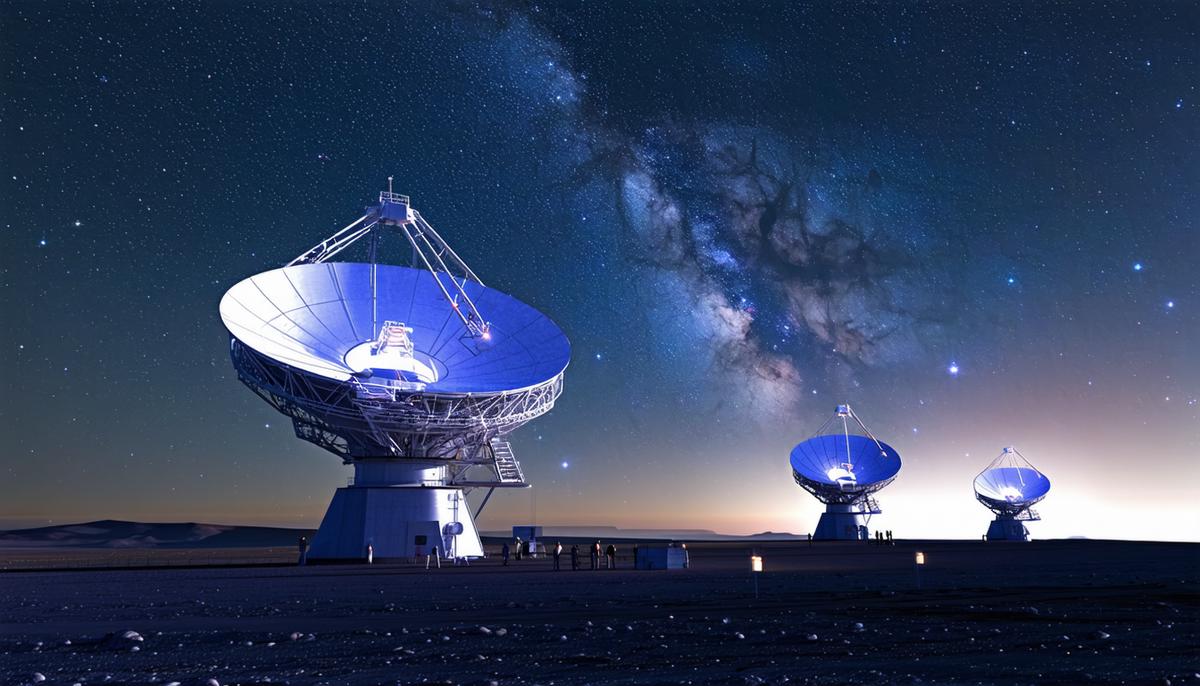
In the red, dusty expanse of Western Australia’s Murchison region and the Karoo desert of South Africa, a scientific revolution is quietly taking shape. The Square Kilometre Array (SKA) stands as a testament to human curiosity and international collaboration. As the largest radio telescope ever conceived, the SKA is not merely an instrument; it is a time machine, a probe of fundamental physics, and a potential key to unlocking the universe’s most profound secrets .
With a total collecting area of approximately one square kilometre, this monumental project combines cutting-edge technology and massive computing power to answer questions that have puzzled humanity for millennia. The SKA is designed to explore the earliest moments of the universe, investigate the nature of dark matter and dark energy, test the limits of Einstein’s general relativity, and even search for signs of intelligent life beyond our solar system .
This article delves into the capabilities of the SKA, its ambitious scientific goals, and the groundbreaking discoveries it promises to deliver.
The Engineering Marvel Behind SKA
The philosophy behind the SKA represents a radical departure from traditional telescope design. Rather than building a single massive dish—which faces structural and engineering limitations—the SKA employs a technique called interferometry . This approach involves connecting thousands of smaller antennas via optical fibre networks, which then function as a single, colossal virtual telescope.
A. The Two-Site Architecture
The SKA project is divided into two distinct telescopes to cover a broad spectrum of radio frequencies:
-
SKA-Low (Australia): Located in Western Australia, this array will be the world’s largest low-frequency radio telescope. It will consist of 131,072 tree-like antennas, each about two metres tall, spread across 74 kilometres . Its primary focus is on the low-frequency signals from the universe’s “Dark Ages” and “Cosmic Dawn”—the period when the first stars and galaxies began to form. An early version of this telescope, using only 1,024 antennas, has already captured its first image, revealing 85 of the brightest galaxies in a portion of the sky. When fully operational, the same frame will show over 600,000 galaxies .
-
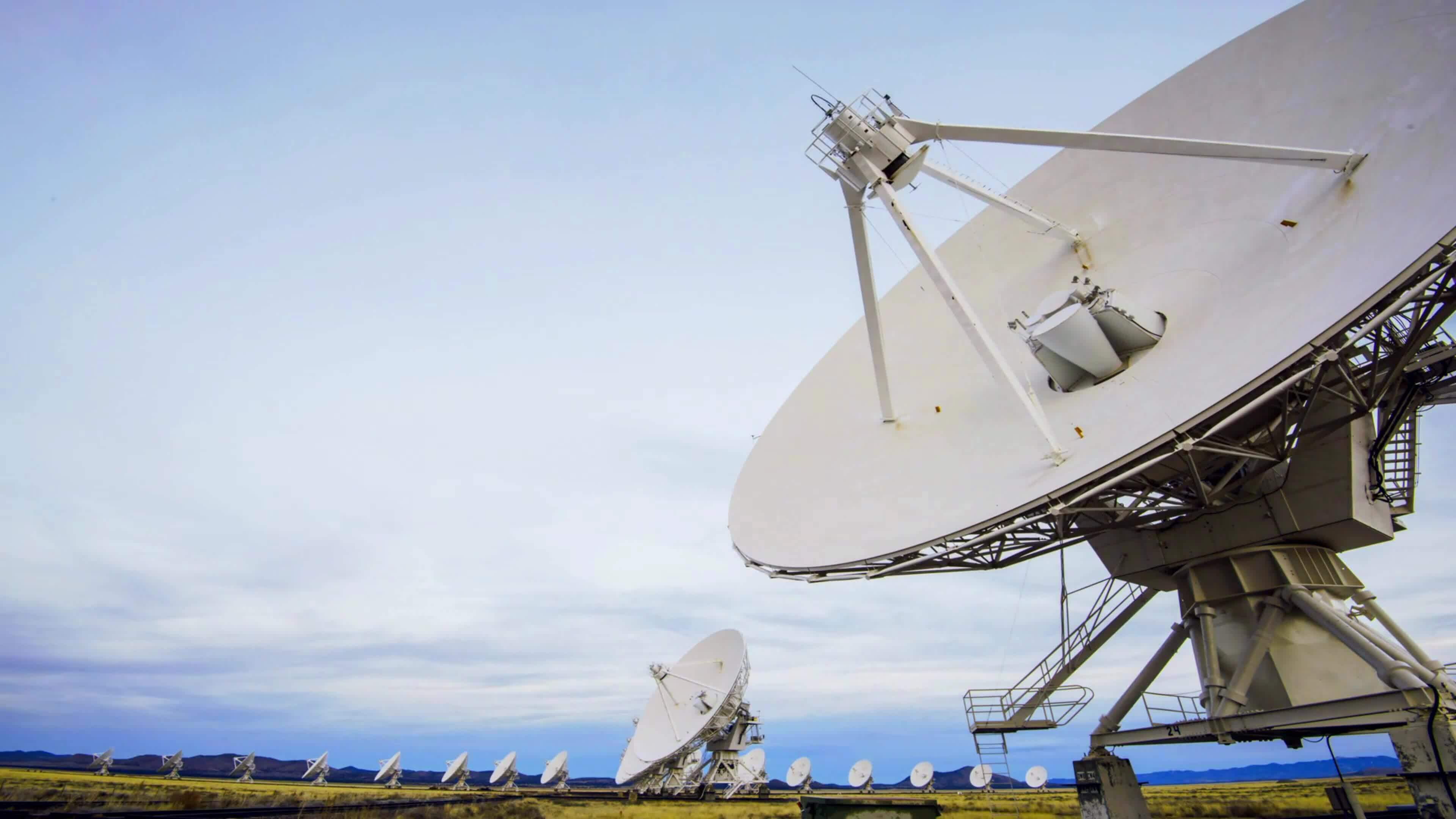
SKA-Mid (South Africa): Situated in the Karoo region, this array will consist of 197 three-storey-high dishes. It will observe mid-frequency ranges, complementing SKA-Low’s capabilities and investigating different aspects of the cosmos .
B. The Data Challenge
The sheer scale of the SKA creates unprecedented data challenges. The sheer volume of data generated is so vast that the required computing technology does not yet exist in an affordable form . To manage this flood of information, each telescope will have a dedicated supercomputer with computing power rivaling the top five fastest supercomputers in the world . This necessitates constant innovation in software and hardware to process, store, and transmit the data.

Unraveling the Mysteries of the Early Universe
One of the SKA’s primary goals is to act as a cosmic time machine, peering back over 13 billion years to the universe’s infancy . By observing the redshifted 21 cm signal from neutral hydrogen, the SKA can map the distribution of this element in the early universe. This mapping provides crucial insights into several key areas:
A. Investigating Dark Matter and Dark Energy
The nature of dark matter and dark energy remains one of the most outstanding problems in modern cosmology. The SKA is uniquely positioned to probe these unseen entities.
-
Dark Matter Particles: The 21 cm signal serves as a sensitive tracer of neutral hydrogen during the “Cosmic Dawn.” Dark matter particles, if they annihilate or decay, can inject energy into the intergalactic medium, altering its thermal and ionization history . These changes leave a distinctive imprint on the 21 cm power spectrum. The SKA is projected to be up to 1,000 times more sensitive than current experiments in constraining the properties of dark matter. For instance, it could reach sensitivities of <σv> ≤ 10⁻²⁸ cm³ s⁻¹ for 10 GeV dark matter particles—far surpassing existing limits .
-
Primordial Black Holes: The SKA will also investigate primordial black holes (PBHs), which may have formed in the early universe. The Hawking radiation from these PBHs would also modify the 21 cm signal. The SKA could probe PBHs with masses as low as 10¹⁶ grams, a mass range largely inaccessible to other cosmological probes .
-
Dark Energy and Cosmic Expansion: The SKA will map the distribution of hydrogen in the universe over vast cosmic distances. By doing so, it can reveal details about the universe’s expansion after the Big Bang and help identify the nature of dark energy the mysterious force driving this accelerating expansion .
B. Galaxy Evolution and Cosmic Magnetism
The SKA will provide unprecedented views of galaxy formation and evolution. It will be able to observe the faint emission from hydrogen gas in distant galaxies, which is crucial for understanding how structures formed and evolved over cosmic time. Furthermore, it will probe cosmic magnetism on an unprecedented scale.
-
Probing Cosmic Magnetism: Magnetic fields are fundamental to many astrophysical phenomena, yet their origin and evolution are poorly understood. The SKA will conduct an all-sky survey of Faraday rotation measures—a phenomenon where the polarization angle of light from distant sources is rotated by magnetic fields it passes through. This will create a dense “RM grid” that allows astronomers to map magnetic fields in the Milky Way, nearby galaxies, and even in the intergalactic medium . This data could help distinguish between different theories for the origin of seed magnetic fields in the universe .
Testing Fundamental Physics
A. Gravity and General Relativity
Einstein’s General Theory of Relativity has been the cornerstone of modern physics for over a century. However, it struggles to reconcile with quantum mechanics, and there are hints that it may break down under extreme conditions. The SKA will provide the ultimate testing ground by observing pulsars.
Pulsars are rapidly rotating neutron stars that emit beams of radiation at incredibly regular intervals. By monitoring an array of these celestial timekeepers, the SKA will search for ripples in the fabric of space-time known as gravitational waves . In doing so, it will test the limits of General Relativity in the strong gravitational fields around these dense objects .
B. Testing the Cosmological Principle
The SKA will also challenge fundamental assumptions of cosmology. By mapping the distribution of radio galaxies, it can search for a dipole anisotropy, which would indicate a departure from the standard cosmological principle the idea that the universe is homogeneous and isotropic on large scales. Such observations could explain discrepancies like the Hubble tension and push our understanding of cosmology beyond the standard ΛCDM model .
The Search for Extraterrestrial Life
Beyond physical cosmology, the SKA also holds the potential to answer one of humanity’s most profound questions: are we alone? It will investigate the process of planet formation by observing the dusty disks around young stars where planets are born. This will tell us how Earth-like rocky planets form and how common they might be in the galaxy .
Moreover, the SKA will be capable of detecting very faint radio signals. While powerful, the “technosignatures” or radio leakage from an advanced civilization would be weak. However, the SKA’s sensitivity is such that if such signals exist, this radio telescope could be the first to detect them, potentially proving the existence of intelligent life beyond Earth .
Conclusion
The Square Kilometre Array is more than just a radio telescope; it is a monumental leap forward in our quest to understand the universe. By combining unprecedented sensitivity, resolution, and data processing power, the SKA will probe the very fabric of reality. From the cosmic dawn of the first stars to the enigmatic nature of dark matter and energy, and from the dynamo of galactic magnetic fields to the potential whispers of alien civilizations, the SKA is poised to revolutionize almost every field of astronomy and astrophysics.
As construction progresses and the telescope grows, the images and data it produces will improve exponentially, promising to reveal a universe richer and more complex than we have ever imagined . This truly global project, built on international collaboration, is set to open a new window on the universe and fundamentally change our place within it.