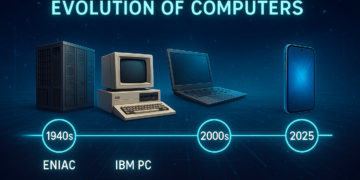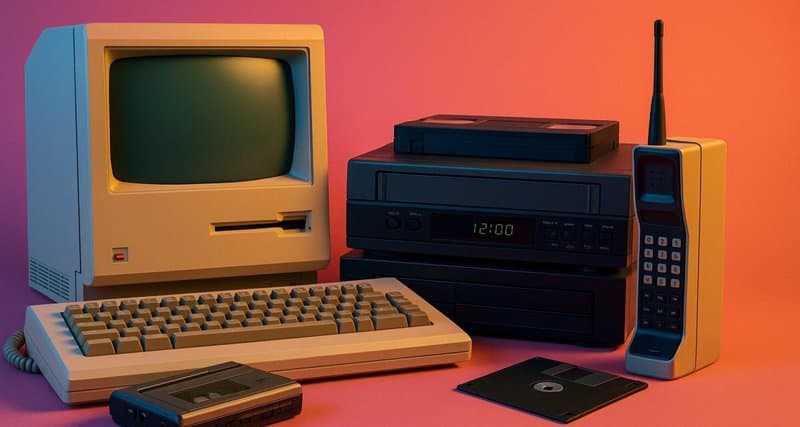
In today’s fast-paced digital era, the word “innovation” is thrown around more frequently than ever before. Tech giants and startups alike boast about groundbreaking discoveries, revolutionary features, and futuristic designs. But beneath the glossy marketing campaigns and dramatic launch events, a lingering question persists: Are we genuinely witnessing new breakthroughs, or is much of what we celebrate simply old technology repackaged with a fresh coat of paint?
This article takes a deep dive into the cyclical nature of technology, exploring how concepts that were once abandoned, overlooked, or simply too early for their time are now resurfacing as “game-changers.” From artificial intelligence to virtual reality, from foldable screens to blockchain, we dissect the fine line between true progress and clever rebranding. By the end of this comprehensive analysis, you will not only understand the mechanisms behind tech recycling but also learn to distinguish authentic innovation from marketing hype.
The Illusion of Novelty: Why Old Tech Keeps Coming Back
Technology evolves in spirals, not straight lines. What seems brand new today often has roots stretching back decades—sometimes even centuries. Consider the following factors that drive this phenomenon:
A. The Cost of True R&D
Developing genuinely new technology requires massive investments in research, testing, and failure. Many companies find it cheaper to revisit older patents, refresh existing hardware, and promote incremental improvements as paradigm shifts. This approach reduces financial risk while maintaining a public image of forward momentum.
B. Consumer Psychology and Familiarity
People are drawn to what feels slightly familiar yet upgraded. By rebranding old concepts such as voice assistants (which existed in rudimentary forms since the 1960s) or wearable computers (first conceptualized in the 1980s) companies tap into nostalgic comfort while promising modern convenience. This psychological bridge lowers adoption barriers.
C. Infrastructure Catch-Up
Some technologies were genuinely ahead of their time but failed due to limited processing power, poor internet bandwidth, or high costs. Today, with 5G networks, cloud computing, and miniaturized semiconductors, these same ideas finally become viable. However, the core principle remains unchanged—only the delivery mechanism is new.
D. Marketing Genius vs. Engineering Reality
Marketing departments excel at reframing specifications. A “smart” refrigerator with a touchscreen is, at its heart, a standard cooling unit with an embedded tablet. A “neural engine” in a smartphone is essentially a specialized DSP (digital signal processor) a concept from the 1990s. The language shifts, but the hardware often tells a different story.
Case Study 1: Artificial Intelligence – The Oldest New Kid on the Block
Artificial Intelligence (AI) is perhaps the most glaring example of old tech rebranded as new. The term itself was coined in 1956 at the Dartmouth Conference. Early AI systems used rule-based logic and symbolic reasoning—methods that are still employed today in expert systems. Fast forward to the 2020s, and we hear about “generative AI,” “neural networks,” and “deep learning” as if they emerged overnight.
A. Neural Networks: A 1940s Concept
The perceptron, the building block of modern neural networks, was introduced by Frank Rosenblatt in 1958. Back then, it was hailed as a machine that could learn, but limited computing power stalled its progress. Today, with GPUs and TPUs, we can train models with billions of parameters—yet the underlying mathematical framework is nearly identical.
B. Natural Language Processing (NLP)
Chatbots and language models date back to ELIZA (1966), a program that mimicked a psychotherapist. Modern tools like ChatGPT are infinitely more sophisticated, but they still rely on pattern matching, statistical probabilities, and transformer architectures—concepts that have been researched since the 1990s. The leap is in scale, not in fundamental theory.
C. Computer Vision
Image recognition using convolutional neural networks (CNNs) was pioneered in the 1980s. Today’s facial recognition and object detection systems are faster and more accurate, but they operate on the same convolution and pooling principles. The “innovation” lies in training data abundance and hardware acceleration, not in the algorithm itself.
D. Reinforcement Learning
This technique, popularized by AlphaGo and robotics, originates from the 1950s concept of trial-and-error learning in animals. The core equations (Bellman equations, Markov decision processes) were formalized decades ago. Again, modern success is attributed to computational power and simulation environments, not to novel ideas.
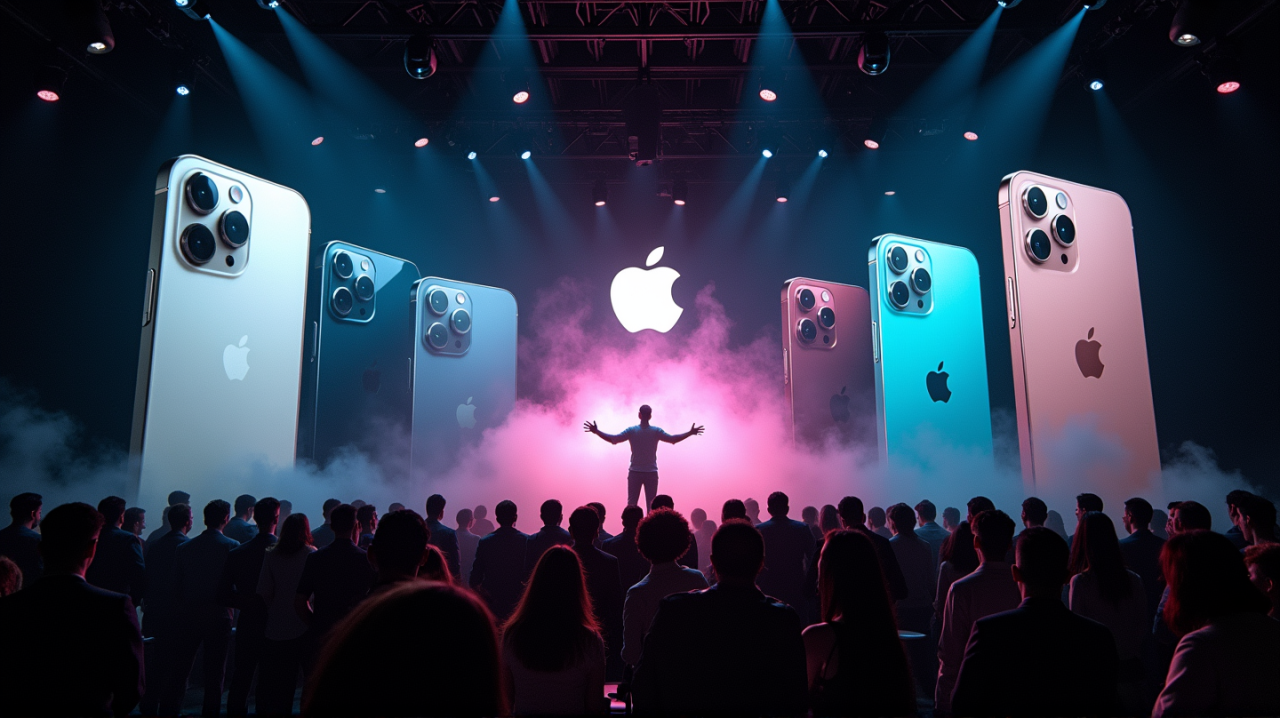
Case Study 2: Virtual and Augmented Reality – Déjà Vu All Over Again
Virtual Reality (VR) and Augmented Reality (AR) are frequently marketed as the next computing platforms. Yet the first VR headset, the Sword of Damocles, was built in 1968. AR concepts appeared in films and research labs throughout the 1990s. So, what has truly changed?
A. Field of View and Latency
Modern headsets offer wider fields of view and lower latency, thanks to better displays and motion tracking. However, the stereoscopic 3D rendering and head-tracking algorithms are direct descendants of 1990s military and flight simulation projects.
B. Hand Tracking and Haptics
Glove-based controllers were experimented with in the 1980s (e.g., the DataGlove). Today’s hand-tracking uses computer vision and depth sensors, but the goal—natural human-computer interaction—remains unchanged. Haptic feedback vests and gloves are merely refinements of older force-feedback devices.
C. Social VR Platforms
Second Life, launched in 2003, was a virtual world where users could socialize, trade, and build. Today’s metaverse platforms (e.g., Horizon Worlds, VRChat) are essentially Second Life with better graphics and VR integration. The economic models, user-generated content, and avatars are strikingly similar.
D. Mixed Reality in Enterprise
Microsoft’s HoloLens and similar devices are often touted as revolutionary for industrial training and design. Yet head-mounted displays for maintenance and repair were tested by Boeing and NASA in the late 1990s. The difference is now we have lighter hardware and wireless connectivity—incremental, not revolutionary.
Case Study 3: Foldable Screens and Flexible Displays – A 1970s Dream
Foldable smartphones, like the Samsung Galaxy Z Fold and Huawei Mate X, have captured global attention. But flexible display technology is far from new. The first flexible LCD was demonstrated in the 1970s, and e-paper (E Ink) with bendable properties emerged in the early 2000s.
A. Material Science Evolution
The shift from glass substrates to polyimide plastics enabled folding. However, the pixel driving circuits, thin-film transistors, and color filters are mature technologies inherited from conventional OLED panels. The “innovation” is the hinge mechanism and protective coating—not the display itself.
B. User Interface Adaptation
Software that adapts to folding states (e.g., tablet mode vs. phone mode) is an extension of responsive design principles used in web development since 2010. Android’s Jetpack libraries now include foldable-aware APIs, but the underlying app lifecycle management is standard.
C. Durability Challenges
Early foldable devices suffered from crease visibility and dust ingress—issues that plagued prototype flexible screens from the early 2000s. Current solutions, such as waterdrop hinges and UTG (ultra-thin glass), are iterative fixes, not foundational breakthroughs.
D. Market Positioning
Foldables are priced as luxury items, reminiscent of early curved TVs and 3D monitors—both of which were marketing gimmicks that faded. Whether foldables become mainstream or remain niche depends on cost reduction, but the core technology is undeniably a rebrand of existing flexible display R&D.
Case Study 4: Blockchain and Web3 – Distributed Ledgers Revisited
Blockchain is often hailed as a revolutionary trust mechanism. However, cryptographic hash chains and Merkle trees the backbone of blockchain were invented in the late 1970s and early 1980s for digital timestamping and certificate transparency.
A. Proof of Work and Byzantine Fault Tolerance
These consensus algorithms have roots in distributed systems research from the 1980s (e.g., Lamport’s algorithms). Bitcoin simply combined existing cryptographic primitives with an economic incentive model. The novelty was the application, not the technology.
B. Smart Contracts
Automated self-executing contracts were conceptualized in the 1990s by Nick Szabo (who also proposed Bit Gold). Ethereum’s implementation is more flexible, but the logic if-then-else conditions on a distributed ledger is a derivative of earlier legal and computational frameworks.
C. Decentralized Storage
Projects like IPFS and FileCoin echo peer-to-peer file sharing from Napster and BitTorrent (early 2000s). The addition of token incentives and redundancy protocols is an upgrade, but the underlying distributed hash tables (DHTs) are decades old.
D. NFTs and Digital Ownership
Non-fungible tokens are essentially unique digital certificates tracked on a blockchain. The concept of certifying ownership of digital assets was explored in the late 1990s with systems like DigiCash and e-gold. NFTs add verifiable scarcity, but the cryptographic signing and verification processes are well-established.
The Role of Semiconductors: Moore’s Law Masks Repetition
Perhaps the single biggest driver of rebranded innovation is the relentless advancement of semiconductor manufacturing. Smaller transistors, higher clock speeds, and lower power consumption allow old algorithms to run faster and handle larger datasets. But a faster horse is still a horse.
A. Vector Processing and SIMD
Single Instruction, Multiple Data (SIMD) architectures have existed since the 1960s. Modern GPUs and AI accelerators are massively parallel SIMD machines. The terms “tensor cores” and “matrix multiplication engines” are marketing aliases for well-documented parallel processing techniques.
B. Memory Hierarchies
Caches, DRAM, and NAND flash have improved in density and speed, but the hierarchical model (register → L1 → L2 → RAM → storage) is unchanged since the 1980s. New names like “unified memory” or “high-bandwidth memory” describe incremental packaging improvements.
C. Interconnects and Bus Protocols
PCIe, USB, Thunderbolt each generation doubles bandwidth, but the serialized differential signaling and packetized data transfer principles date back to the 1990s. The rebranding occurs when companies invent proprietary names like “NVLink” or “Infinity Fabric” to imply exclusivity.
D. Power Management
Dynamic voltage and frequency scaling (DVFS) has been a staple of mobile and laptop processors since the early 2000s. Today’s “adaptive performance” or “AI-based power optimization” is simply DVFS with machine learning replacing lookup tables again, a rebadge.
When Is It Genuine Innovation? The Criteria for Authentic Breakthroughs
Not everything is a repackaged relic. To separate true innovation from clever marketing, we propose the following litmus tests:
A. New Physical Principle
Does the technology rely on a previously untapped physical phenomenon? Examples include quantum computing (exploiting superposition), graphene transistors (2D material properties), or photonic chips (light-based computing). If it doesn’t challenge fundamental physics, it’s likely an engineering iteration.
B. Order-of-Magnitude Performance Leap
A 10x improvement in speed, energy efficiency, or cost is a strong indicator of substantive progress. For instance, early deep learning models required weeks of training; today’s distributed systems do it in hours—thanks to parallelism, not algorithmic novelty, but the scale itself unlocks new capabilities.
C. Enabling Previously Impossible Applications
If the technology makes possible what was considered science fiction, it qualifies. Examples include gene editing with CRISPR (biology, not computing), or space reusability (SpaceX rockets). In tech, real-time translation between 100 languages without internet while impressive relies on older statistical models with richer datasets.
D. Paradigm Shift in User Experience
Touchscreens (iPhone, 2007) were not new resistive touch existed. But capacitive multi-touch with gesture recognition changed interaction paradigms. Similarly, voice-first interfaces like Alexa changed home behaviors. These are legitimate innovations because they redefined human-machine relationships.

The Danger of Hype: Why Rebranding Hurts Progress
When old tech is aggressively marketed as new, several negative consequences emerge:
A. Misallocation of Investment
Venture capital flows into copycat startups rather than high-risk, high-reward basic research. This stifles long-term breakthroughs in favor of short-term profit.
B. Consumer Fatigue and Skepticism
After repeated disappointments (e.g., 3D TVs, Google Glass, biometric payment rings), consumers grow cynical. This skepticism makes it harder for truly innovative products to gain traction.
C. Environmental Waste
Rebranded tech often pushes unnecessary upgrades, leading to electronic waste. A “new” smartphone with a slightly better camera but no functional leap accelerates obsolescence.
D. Dilution of Scientific Vocabulary
Words like “quantum,” “neural,” and “blockchain” become buzzwords divorced from their rigorous meanings. This dilutes public understanding of science and engineering, making it harder to have informed policy debates.
How to Spot Rebranded Tech: A Consumer’s Checklist
To avoid being swayed by marketing fluff, adopt this analytical framework when evaluating any new gadget or service:
A. Trace the Patent History
Search for similar patents filed 10+ years ago. If the core claims match, the technology is an incremental update.
B. Read the Fine Print
Compare specifications across generations. If battery life, screen resolution, or processing power improve by less than 30%, it’s likely a minor revision.
C. Look for Independent Benchmarks
Third-party tests (e.g., AnandTech, iFixit, Tom’s Hardware) reveal whether performance gains come from software optimization or hardware novelty.
D. Question the Use Case
Ask: Does this solve a genuine problem, or is it a solution looking for a problem? If the latter, treat it with skepticism.
E. Check Academic Literature
If research papers from 5+ years ago describe the same algorithm or architecture, the technology is derivative. Genuine breakthroughs are accompanied by a surge of new publications.
The Bright Side: Incremental Progress Is Still Valuable
It is essential to remember that not all rebranding is malicious. Incremental improvements even if dressed up as revolutionary compound over time. The smartphones of today are unimaginably more capable than those of 2007, even though they build on decades of prior art. The key is to maintain honest communication.
A. Transparency Builds Trust
Companies that openly acknowledge their debt to earlier research (e.g., citing academic papers, sharing open-source code) earn credibility. Transparency encourages collaborative innovation.
B. Engineering Excellence Matters
Optimizing old concepts for mass production, lower cost, and higher reliability is a form of innovation in its own right. Think of electric vehicles batteries and motors are old, but Tesla’s thermal management and software integration are truly novel.
C. Cross-Disciplinary Fusion
Combining two old technologies can create a new domain e.g., AI + IoT = AIoT, or blockchain + supply chain = traceability. The fusion is the innovation, even if the components are vintage.
D. Democratization of Access
Making previously expensive or complex technology affordable and user-friendly is a social good. For example, gene sequencing was once a multi-million dollar endeavor; today it costs hundreds. The underlying chemistry is old, but the accessibility is new.
Conclusion: Embracing the Cycle with Discernment
The technology industry will continue to rebrand old ideas as new innovations—it’s economically expedient and psychologically compelling. As consumers, investors, and enthusiasts, our responsibility is not to reject all incrementalism but to demand clarity, celebrate genuine breakthroughs, and appreciate the art of refinement without mistaking it for revolution.
The next time you see a product launch that claims to “change everything,” pause and investigate. Trace its lineage. Compare its specs. Ask critical questions. You may find that what you’re holding is not a futuristic marvel but a carefully polished artifact from the past—and that’s okay, as long as we recognize it for what it truly is.
Innovation is not a single thunderbolt but a steady rain. The droplets may be old, but the landscape they shape is new. Let us celebrate the rainmakers who are honest about where the water comes from.